


Free Same Day Custom Sizing
We'll professionally size any cane to your exact height at no charge! Our FREE same-day custom sizing servicie ensures optimal comfort and support. Simply provide your measurements, and we'll have your cane perfectly adjustable before it ships. Use guide below to determine your ideal cane height, or contact us for personalized assitance.

LEARN MORE ABOUT SIZING
-

Measure for Your Fit
Follow these simple steps to accurately measure yourself for the ideal cane size. A precise measurement ensures optimal comfort and support.
-

Selecting Your Size when Buying
Get clear instructions on how to select the right cane size before your buy. Get the perfect fit day one.
-

Post-Delivery Sizing
Find out how you can adjust your cane's size after it arrives. This section clarifies options for achieving a perfect fit at home.
-

Adjustable vs Fixed
Learn the key difference between adjustable and non-adjustable canes to choose what's best for your needs.
-

Why Fit Matters
Discover why choosing the correct cane size is crucial for comfort, stability, and effective support
Find Your Perfect Fit for Better Stability
Measure for Your Fit
Follow these simple steps to accurately measure yourself for the ideal cane size. A precise measurement ensures optimal comfort and support.
How to Find Your Perfect Cane Length
Finding the correct cane length is crucial for comfort and support. To get the best fit, a cane's handle should reach the crease of your wrist when your arm is hanging at your side. Use this chart as a quick guide to find the cane length for your height.
ESTIMATED CANE LENGTH
(Measurement instructions below for exact fit)
| User's Height | 5'0" | 5'1" | 5'2" | 5'3" | 5'4" | 5'5" | 5'6" | 5'7" | 5'8" | 5'9" | 5'10" | 5'11" | 6'0" | 6'1" | 6'2" | 6'3" |
|---|---|---|---|---|---|---|---|---|---|---|---|---|---|---|---|---|
| Recommended Cane Length | 30" | 30.5" | 31" | 31.5" | 32" | 32.5" | 33" | 33.5" | 34" | 34.5" | 35" | 35.5" | 36" | 36.5" | 37" | 37.5" |
| User's Height | Recommended Cane Length |
|---|---|
| 5'0" | 30" |
| 5'1" | 30.5" |
| 5'2" | 31" |
| 5'3" | 31.5" |
| 5'4" | 32" |
| 5'5" | 32.5" |
| 5'6" | 33" |
| 5'7" | 33.5" |
| 5'8" | 34" |
| 5'9" | 34.5" |
| 5'10" | 35" |
| 5'11" | 35.5" |
| 6'0" | 36" |
| 6'1" | 36.5" |
| 6'2" | 37" |
| 6'3" | 37.5" |
3 Ways to Measure to Find Your Best Fit
Simply choose the method below that works best for you to find your perfect cane size.


1. Measure the size of an existing cane.
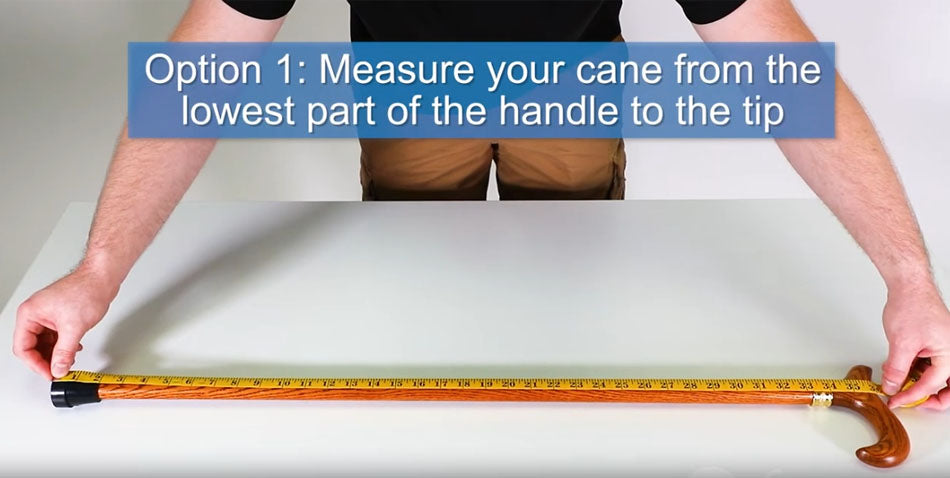
Simply take an existing cane, and measure from the lowest part of the top of the handle to the bottom of the tip. Round up to the nearest half inch.
2. Measure the Cane User
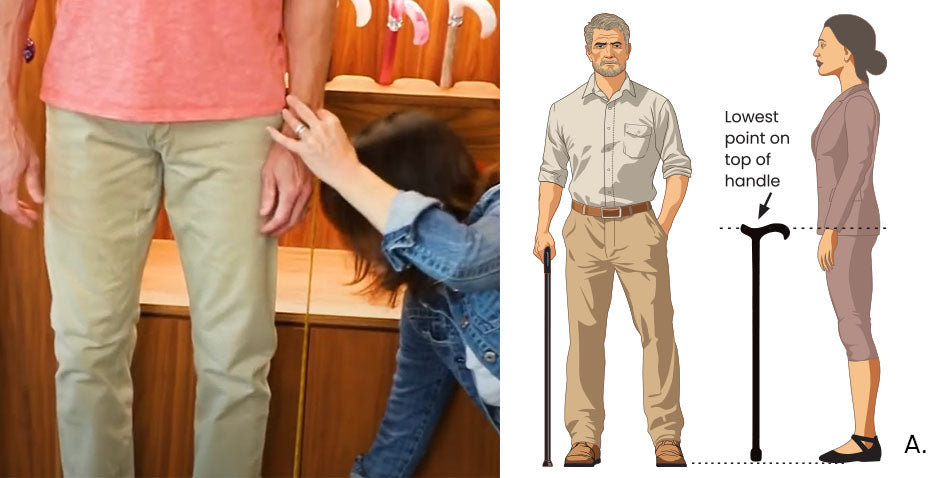
- 1. Have the user put on their walking shoes.
- 2. Users should stand naturally upright as much as possible.
- 3. Let their arms fall to the sides naturally with a normal relaxed bend at the elbow. (see Diagram A for correct posture.)
- 4. Using a tape measure or yard stick, measure the distance from their wrist joint (bottom crease at the wrist) down to the floor. Round up to the nearest half inch.
* For accurate length a second person must read measurement to prevent
wrist from moving.
3. Use cane user's height to estimate cane length
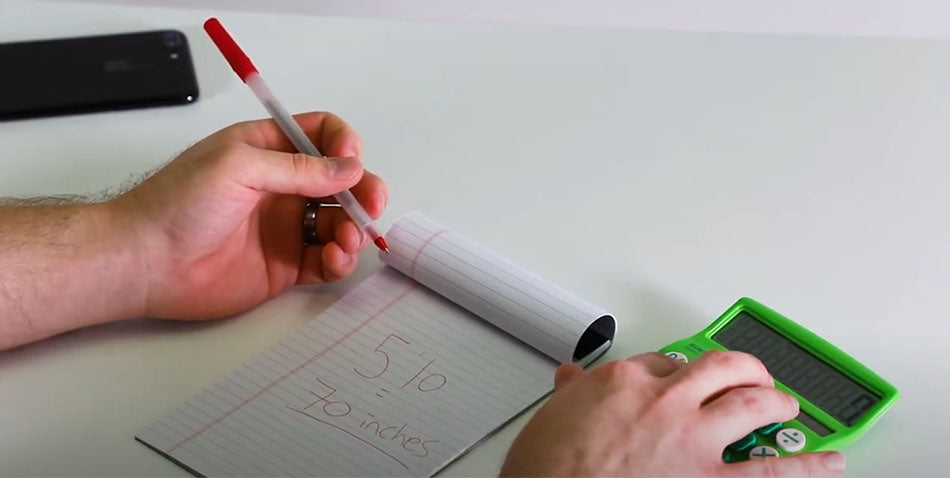
Most users' cane measurements will be within one inch of half the user's height.
- 1. Convert height into inches: Example user height is 5'6", which is 66 inches. 66 divided in half is 33 inches (always round up to the nearest half inch).
- 2. Add half an inch to this measurement to get 33.5 inches.
The estimated cane length would be 33.5 inches for the above example.
Find Your Perfect Fit
Our quick and easy-to-follow video demonstrates exactly how to measure yourself for the ideal cane size, ensuring maximum comfort and proper support.

Your Perfect Fit, Our Promise. Sizing Experts Since 99'
Still not sure? Chat with one of our cane experts now

Selecting Your Size When Buying
Get clear instructions on how to select the right cane size before you buy. Get the perfect fit day one.
Requesting your size is as easy as 1, 2, 3!
Follow the steps below to select your size when purchasing
Please note: Canes cut from their original size will incur a 30% restocking fee if returned.

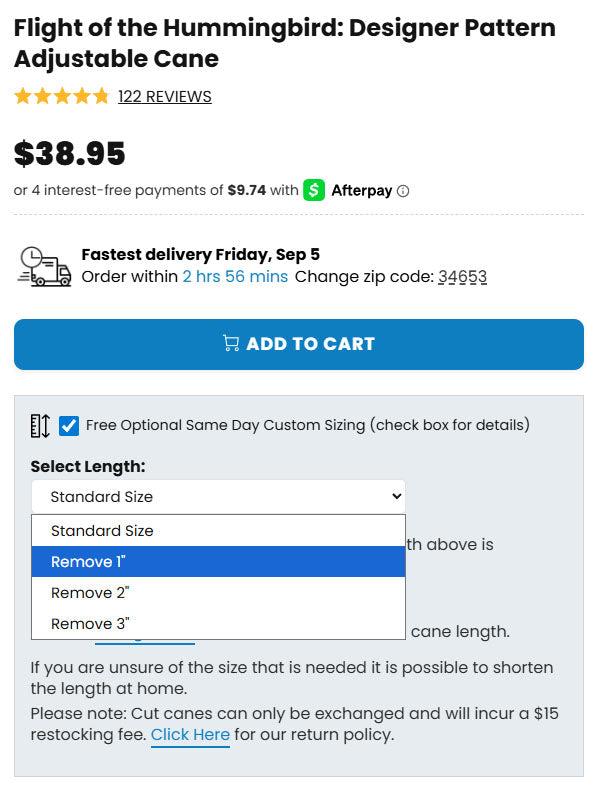
Selecting your size for an Adjustable Walking Cane
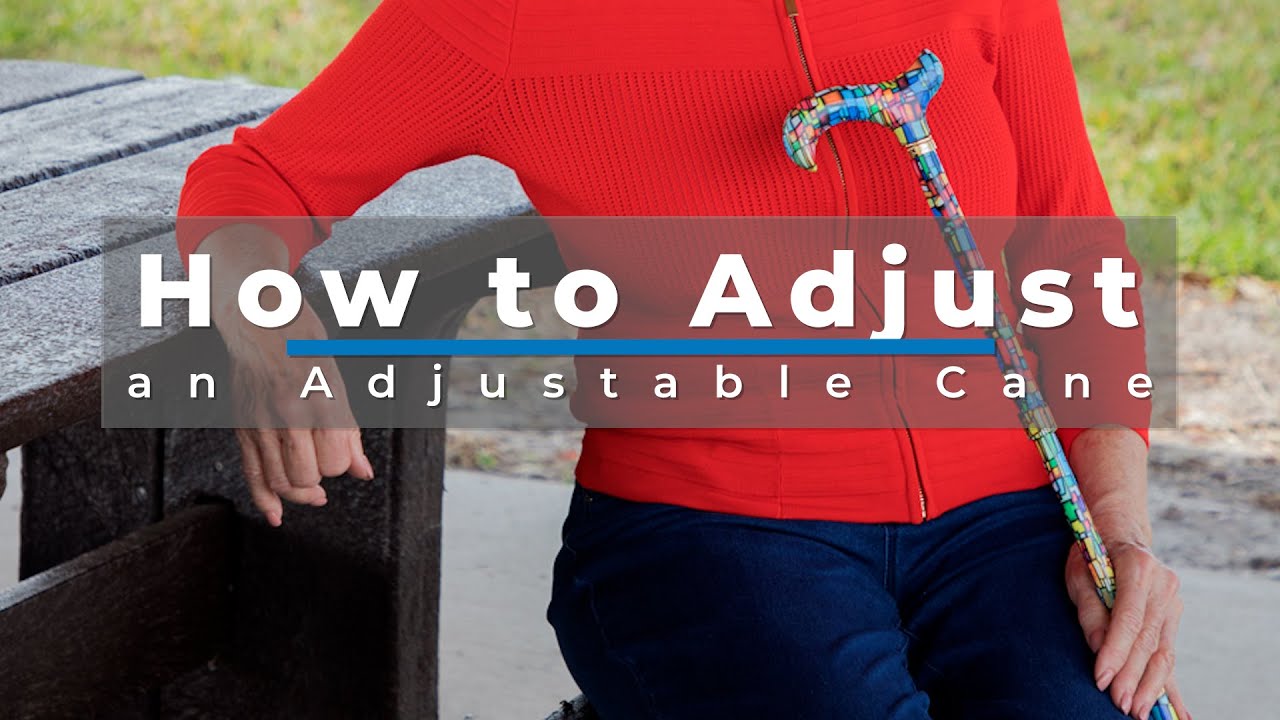
Adjustable Walking Canes can fit a variety of heights and adjust in 1” increments. Since most canes easily adjust to fit most users 4' 10" to 6' 4" tall, these canes are a good fit for buying as gifts, or if you like to wear different kinds of shoes that change your height. If you are shorter than the recommended height, you can request up to 3” inches removed from the cane, to make the length shorter. Check the product details for the recommended user heights.

Post-Delivery Sizing
Find out how you can adjust your cane's size after it arrives. This section clarifies options for achieving a perfect fit at home.
How to cut your own Walking Cane
(use for wood, lucite, carbon fiber or aluminum canes)
- Measure your proper cane height by using step #2 (ABOVE IN CANE SIZING INFO).
- Measure your cane from the lowest part on the top of the handle to the bottom of the rubber tip. (see diagram A)
- Take this length and subtract the length determined by step #2. This will be the size that will need to be cut off from your cane.
- To size the cane, remove the rubber cane tip by using a twisting motion.
- Cut the needed amount off your cane using a hacksaw or fine-tooth blade. Make sure to cut it at a flat angle.
- Replace the rubber tip and make sure it is on securely before use.
Example: A cane is received at 37 inches. The size determined in Step #2 is 32". (37"-32"=5") The length that should be removed is 5".
PLEASE NOTE: Please do not cut any canes, including umbrella, sword, seat, bull organ canes, or other canes marked "not to be sized."
PLEASE NOTE: StyleStix canes with the added light-up feature cannot be cut after being received.
PLEASE REMEMBER CANES CAN BE SHORTENED, BUT THEY CANNOT BE LENGTHENED.

Adjustable vs Fixed Lengths
Learn the key differences between adjustable and non-adjustable canes to choose what's best for your needs.
What's the difference?
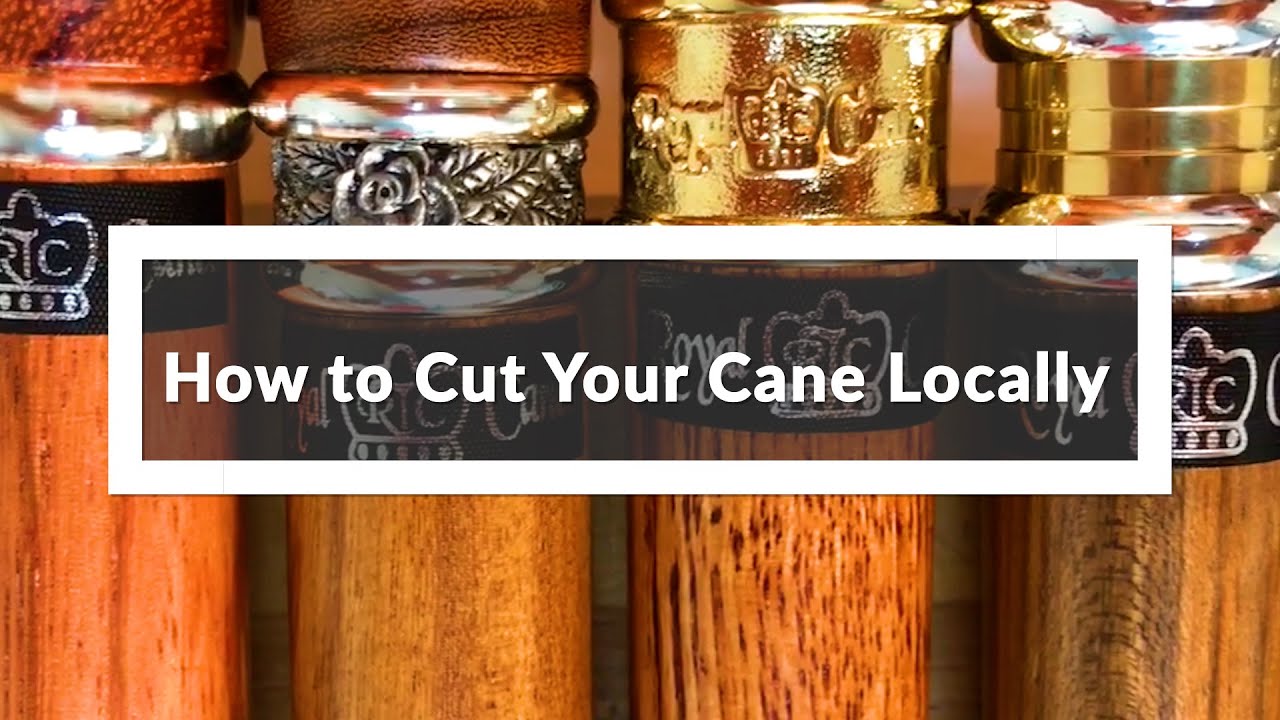
An adjustable cane offers flexibility, allowing you to change its height for a perfect, personalized fit. This is ideal for those who need a custom length or prefer to adjust it for different shoes or activities. A fixed-length cane, like those made of wood, provides timeless elegance and a unique feel. These canes are meticulously crafted to a set size, offering a sturdy and reliable experience. We can cut your cane before it ships once you choose the desired length.

Why Fit Matters
Learn the key differences between adjustable and non-adjustable canes to choose what's best for your needs.

Why Size?
Find Your Proper Cane Height and Length for Better Stability.
Before you start using a cane or walking stick, it is very important to measure it to find your proper cane height so it is the right length for you. Undersized or oversized canes may not offer the same stability and performance as a properly sized cane. Read on to learn how to size and cut canes for yourself or someone else.


